License #LI0028628
Watering Programs Customized for Different Zones
Irrigation Systems Installation & Repair in Temple for landscapes with inconsistent watering coverage, properties needing improved water efficiency, or systems requiring seasonal maintenance and diagnostics
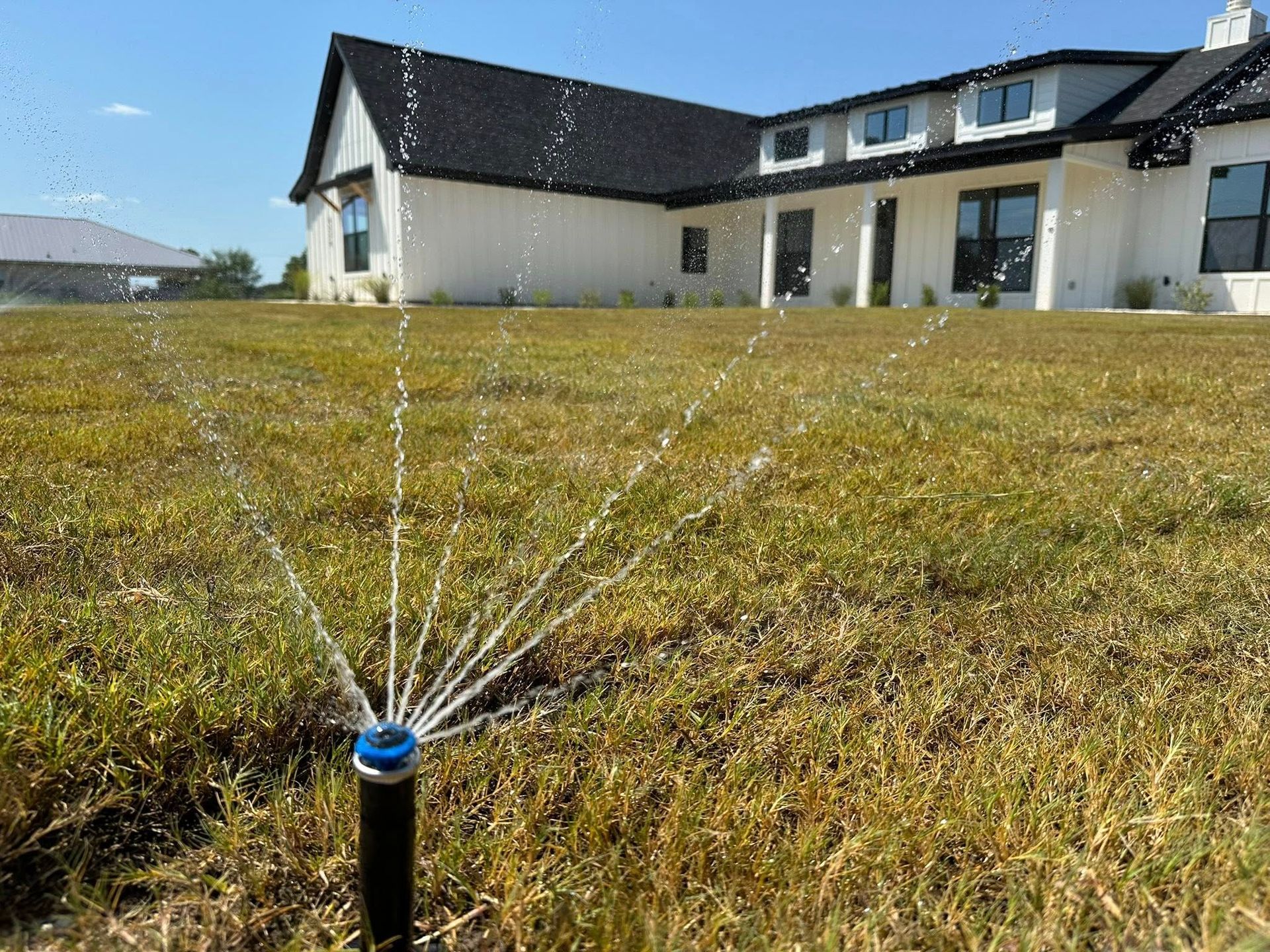
Inconsistent watering coverage creates brown patches in turf areas, overwatered zones near structures where runoff occurs, and stressed ornamental plantings that receive either too much or too little moisture depending on their location. Smart sprinkler systems improve water efficiency and landscape health by allowing automated zone scheduling customized for different areas of the property, with drip irrigation systems delivering targeted watering solutions for planting beds and landscape features where overhead spray would waste water or promote fungal issues. Centex Yard Solutions designs and installs irrigation systems throughout Temple that account for sun exposure, soil absorption rates, and plant water requirements, while seasonal startups, winterization services, inspections, and diagnostics maintain reliable performance year-round in Central Texas conditions.
Automated zone scheduling allows turf areas with full sun exposure to receive longer watering cycles than shaded zones, and planting beds with drip emitters to operate on separate schedules from overhead spray zones. Backflow testing helps protect potable water supplies and maintain compliance with applicable regulations by verifying that irrigation water does not siphon back into household water lines during pressure drops or system malfunctions.
Schedule a system evaluation to identify coverage gaps, inefficient zones, or components requiring repair to improve irrigation performance.
What Happens After Zone Scheduling Is Optimized
System design involves calculating precipitation rates for each sprinkler head type, mapping coverage overlap to eliminate dry spots, and sizing valve zones so that available water pressure supports simultaneous operation of all heads within a zone without reducing spray distance or pattern uniformity. Drip irrigation installation includes pressure regulation to prevent emitter blowouts, filtration to reduce clogging from sediment, and flush valves at line ends that allow periodic clearing of accumulated debris.
After installation or optimization, you notice that turf areas green up uniformly without dry patches or oversaturated zones, planting beds receive consistent moisture at root level without water pooling on mulch surfaces, and water usage decreases because irrigation cycles match actual plant needs rather than running on generic timers. Smart controllers adjust watering schedules automatically based on weather data, skipping cycles after rainfall and extending run times during hot, dry periods without manual intervention.
Seasonal startups involve pressurizing the system after winter shutdown, inspecting heads for damage or misalignment, and programming controllers for the growing season, while winterization services drain water from lines and components to prevent freeze damage during occasional hard freezes common in Central Texas winters. Certified backflow repairs and new backflow assembly installations support safe irrigation system operation by maintaining one-way flow and preventing contamination risks.
What Property Owners Usually Ask
Irrigation systems involve water efficiency, maintenance schedules, and regulatory compliance considerations, so property owners often have questions about system design, seasonal service requirements, and performance optimization before installation or repairs proceed.
What makes smart controllers more efficient than timer-based systems?
Smart controllers use local weather data, soil moisture sensors, or evapotranspiration calculations to adjust watering schedules automatically, reducing water waste during cooler or rainy periods and increasing runtime during hot, dry stretches without requiring manual programming changes.
How does drip irrigation differ from overhead spray systems?
Drip systems deliver water directly to root zones through low-volume emitters, minimizing evaporation loss and preventing foliage wetting that can promote fungal disease, while overhead spray covers larger areas quickly but loses more water to wind drift and evaporation.
When should backflow testing be scheduled?
Annual backflow testing is typically required by municipal water providers in Temple to verify that backflow prevention assemblies function correctly and protect potable water from contamination, with testing performed by certified technicians who document results for compliance records.
What causes uneven watering coverage?
Coverage gaps result from misaligned spray heads, insufficient overlap between adjacent heads, pressure imbalances that reduce spray distance, or head damage from lawn equipment or foot traffic that alters spray patterns.
How often do irrigation systems require maintenance?
Seasonal startups in spring and winterization before freezing weather provide essential maintenance checkpoints, with mid-season inspections recommended to address head adjustments, leaks, or controller programming changes as landscape conditions or plant water needs evolve.
Centex Yard Solutions installs, repairs, and optimizes irrigation systems that improve water efficiency and landscape health across Central Texas properties. Request a system diagnostic to review coverage performance, identify inefficiencies, and explore smart controller upgrades tailored to your landscape watering needs.