
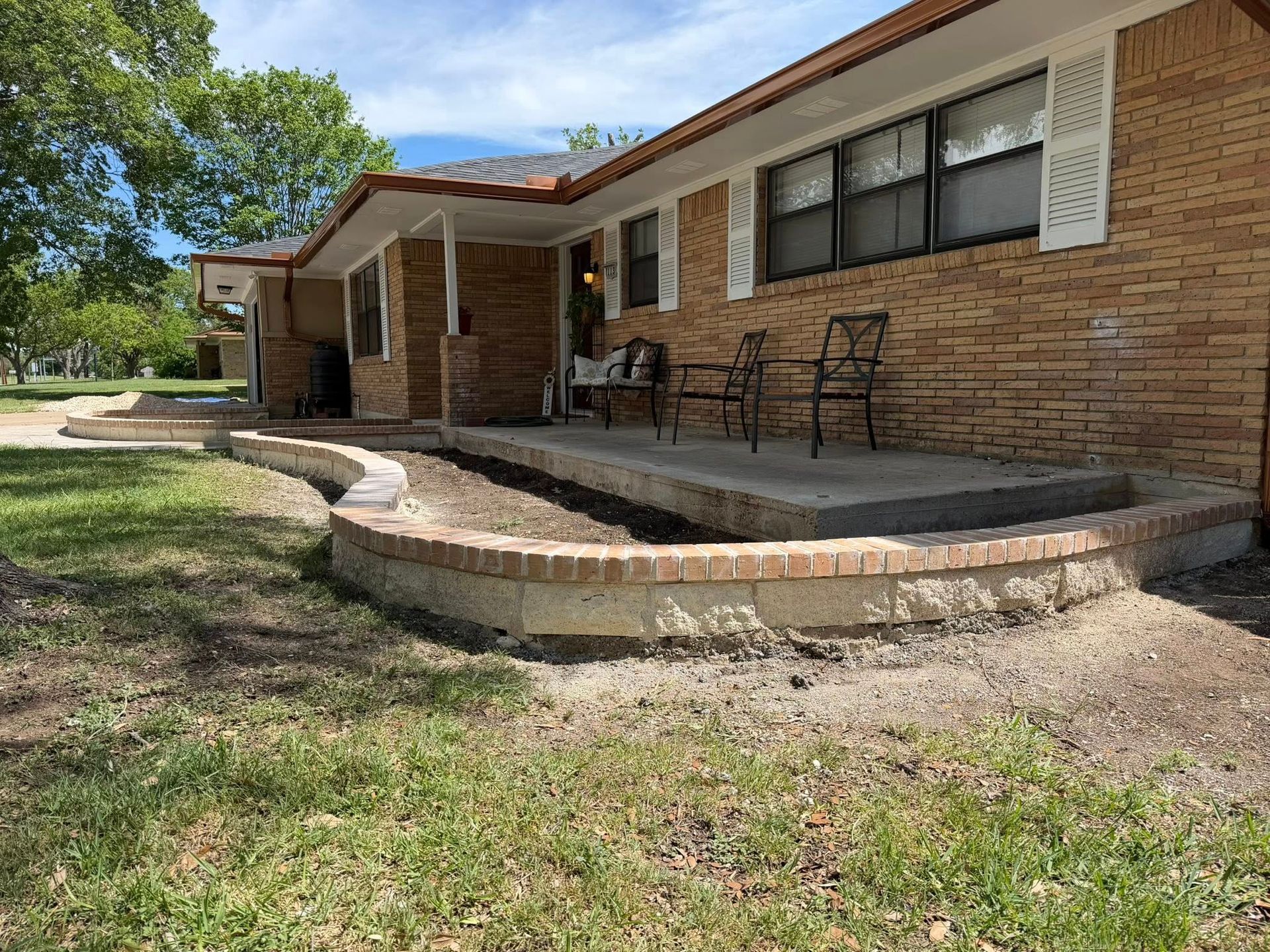
Elevation Changes Managed Without Erosion Concerns
Hardscaping & Structural Masonry in Temple for slopes requiring stabilization, properties needing accessible pathways, or landscapes with drainage issues
Properties with elevation changes, slope instability, or undefined transitions between outdoor areas greatly benefit from the implementation of structural masonry features that not only create functional usable spaces but also effectively control erosion. Centex Yard Solutions expertly constructs a variety of durable hardscape elements throughout Temple, including retaining walls, stone paver systems, well-designed walkways, and sturdy steps specifically engineered to withstand the fluctuating weather conditions commonly experienced in Central Texas. Retaining walls are particularly valuable as they manage elevation shifts by creating terraced levels that significantly reduce runoff velocity during heavy rainfall events, thus preventing soil from migrating down slopes and helping to maintain the integrity of your landscaping. Meanwhile, thoughtfully designed stone pathways and steps improve accessibility by establishing clean, safe transitions across uneven terrain.
The process of proper base preparation is crucial and involves thorough excavation down to a stable subgrade, the incorporation of compacted aggregate layers that effectively resist settling, and the installation of drainage provisions behind retaining walls specifically designed to prevent hydrostatic pressure buildup during saturated conditions. Our construction techniques place a strong emphasis on structural integrity, ensuring that walls remain plumb and paver surfaces stay level even after the challenges presented by freeze-thaw cycles and root growth from nearby vegetation.
Furthermore, we invite you to discuss custom masonry and hardscape solutions that are meticulously tailored to suit your property’s unique elevation and drainage characteristics, helping you enhance both the aesthetics and functionality of your outdoor spaces.
How Retaining Walls Address Slope Instability
Retaining walls function by resisting lateral earth pressure from soil on elevated sides, transferring that load into the wall structure and foundation rather than allowing gradual downslope movement. Base preparation includes compacted crushed stone layers that distribute weight evenly and drainage systems—typically perforated pipe behind the wall surrounded by gravel—that channel water away from the structure and prevent pressure accumulation during wet periods.
Once construction is complete, you notice that slopes no longer erode after storms, terraced areas provide flat planting beds or lawn spaces where previously only unstable slopes existed, and pathways remain level without settling or shifting stones. Stone paver systems create defined walkways with surfaces that drain quickly, resist cracking under temperature changes, and maintain traction during wet conditions better than poured concrete alternatives.
Structural masonry features create visual structure within the landscape while supporting long-term functionality, so hardscape elements integrate with softscaping components to form cohesive outdoor environments. Material selection affects appearance and performance, with natural stone offering varied color and texture and manufactured pavers providing uniform dimensions and color consistency across large installations.
Answers to Frequent Service Questions
Hardscape projects involve structural decisions and site-specific engineering considerations, so understanding the construction process helps property owners evaluate material options and design choices before installation begins.
What determines whether a retaining wall is necessary?
Slopes steeper than approximately three horizontal feet per one vertical foot of elevation change typically require structural support to prevent erosion, while gentler slopes may be managed through grading and vegetation alone depending on soil composition and runoff volume.
How deep must the base preparation extend?
Base depth depends on wall height and soil conditions, with taller walls requiring deeper excavation to reach stable subgrade and accommodate thicker aggregate layers that distribute structural loads, often extending 6 to 12 inches below finish grade for residential applications.
When should drainage systems be included behind retaining walls?
Drainage provisions are necessary whenever water accumulates behind the wall from hillside runoff, irrigation overspray, or natural groundwater movement, as hydrostatic pressure can displace even well-constructed walls if moisture is not channeled away from the structure.
What maintenance do stone paver systems require?
Pavers installed over properly compacted bases require minimal maintenance beyond occasional joint sand replenishment and surface cleaning, with individual stones replaceable if damaged without disturbing surrounding areas.
How do hardscape features affect overall landscape design?
Structural elements like retaining walls and pathways define spatial boundaries within the landscape, creating distinct zones for planting beds, lawn areas, and outdoor living spaces while solving functional problems related to drainage and accessibility in Temple properties.
Centex Yard Solutions designs and constructs hardscape features that address elevation challenges and improve property functionality throughout Central Texas. Arrange a site evaluation to review retaining wall options and paver system designs suited to your property layout.