
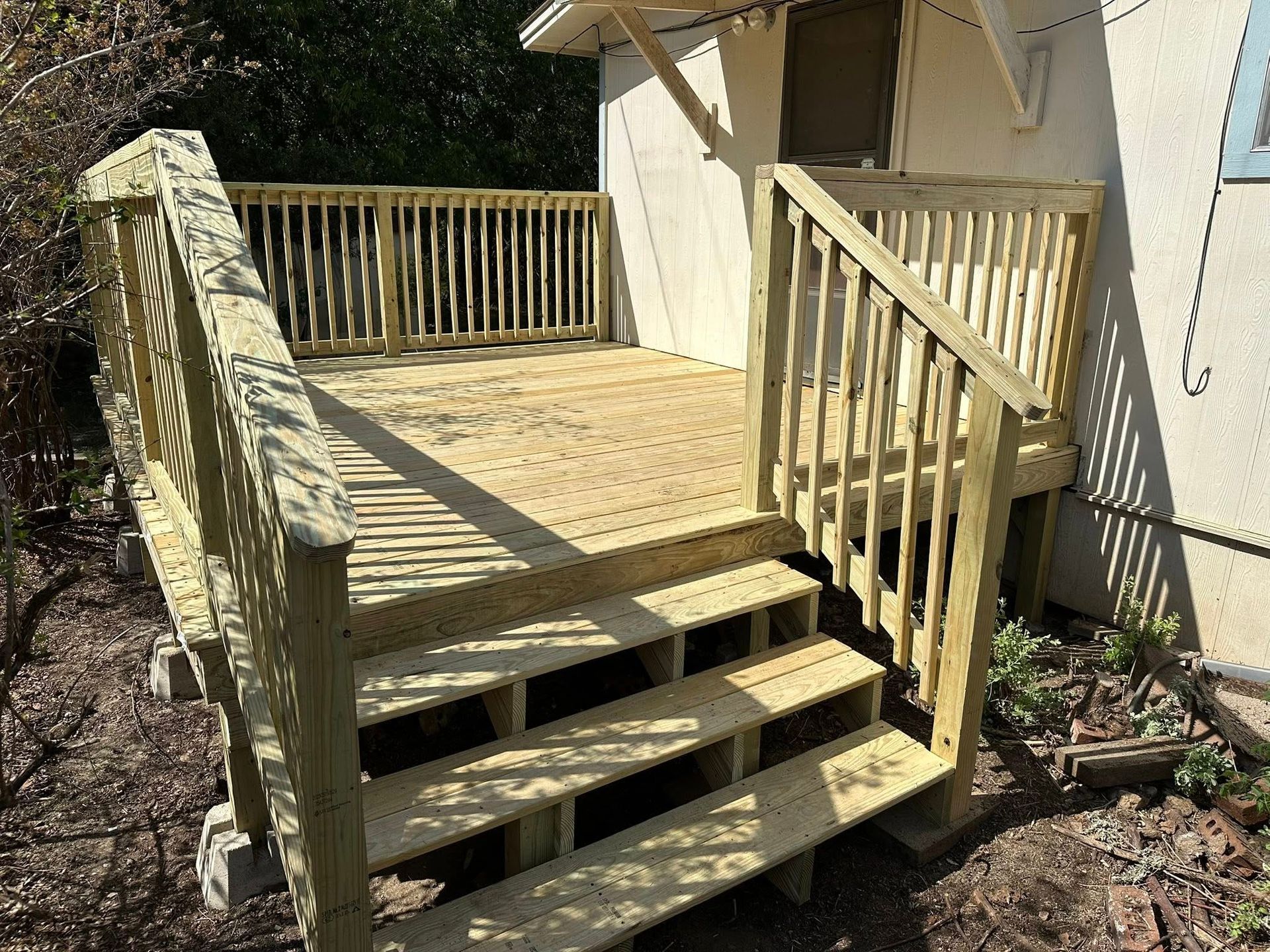
Structural Expansions Tailored to Property Layout
Custom Deck Construction in Temple for properties needing elevated outdoor space, homes requiring multi-level access, or homeowners comparing material durability and maintenance demands
Elevated property terrain, rear entrances requiring access transitions, or the need for additional outdoor entertaining space often drive decisions to construct custom decks designed for dining, relaxation, and everyday use. Multi-level decks, covered structures, and expansions can be tailored to unique property layouts throughout Temple, with material options including composite decking that offers low maintenance and weather resistance or traditional wood decking that provides natural beauty and design flexibility. Centex Yard Solutions coordinates permit requirements and project planning to streamline construction and compliance processes, ensuring structural engineering considerations support long-term safety and stability.
Structural engineering involves load calculations that account for deck size, height above grade, anticipated occupancy, and attachment methods to existing structures. Composite decking resists fading, splintering, and rot caused by moisture exposure, while wood decking requires periodic sealing or staining to maintain appearance and prevent deterioration but allows for custom milling and detailing not possible with manufactured composite boards.
Schedule a consultation to compare deck materials and design options suited to your property's elevation and use requirements.
Why Material Selection Affects Long-Term Performance
Material selection affects maintenance frequency, surface temperature during summer sun exposure, slip resistance when wet, and structural lifespan under Central Texas climate conditions. Composite materials remain cooler underfoot than darker wood stains, resist insect damage without chemical treatment, and maintain dimensional stability without the seasonal expansion and contraction that affects natural lumber, though surface scratches are more visible and harder to repair than damage to wood boards that can be sanded and refinished.
Once construction is complete, you gain elevated outdoor space that extends living area beyond interior walls, with surfaces that remain stable underfoot, railings that meet code height and spacing requirements for safety, and stairs that provide code-compliant transitions between deck levels or from deck to ground. Covered structures attached to decks create shaded zones that reduce direct sun exposure and allow outdoor use during light rain, while multi-level designs create visual interest and define separate functional zones for cooking, dining, and lounging within a single deck system.
Permit coordination involves submitting plans for review, scheduling inspections at framing and completion stages, and addressing any code-related modifications required by local building officials. Structural considerations include beam sizing, joist spacing, footing depth below frost line, and ledger board attachment methods when decks connect to existing structures, all of which affect load capacity and long-term performance.
Questions Before Starting Your Project
Deck construction involves structural, material, and regulatory decisions that affect cost, maintenance, and usability, so understanding trade-offs and requirements before design finalization helps homeowners make choices aligned with their priorities.
What structural inspections are required during construction?
Building inspections in Temple typically occur after footing installation, after framing is complete but before decking boards are installed, and at final completion to verify railing height, stair dimensions, and overall code compliance.
How does composite decking compare to wood in terms of maintenance?
Composite materials require occasional cleaning to remove debris and prevent mold growth but do not need staining or sealing, while wood decking requires refinishing every two to three years to maintain moisture resistance and appearance depending on exposure and wear patterns.
When should covered structures be included in the design?
Covered deck sections are valuable when afternoon sun exposure makes uncovered areas unusable during summer months or when homeowners want weather protection that extends the seasonal use of outdoor space without relocating activities indoors.
What factors affect deck cost?
Material selection, deck size, elevation above grade, structural complexity like multi-level designs or custom railing systems, and site access for equipment and material delivery all influence total project cost.
How do elevation changes affect deck design?
Properties with sloped terrain or elevated rear entrances benefit from multi-level deck systems that create tiered transitions, reducing individual stair runs and integrating the structure visually into the landscape rather than creating a single tall vertical structure.
Centex Yard Solutions constructs custom decks throughout Central Texas using materials and designs matched to property conditions and homeowner preferences. Arrange a site visit to review layout options, material trade-offs, and structural approaches for your specific property.